
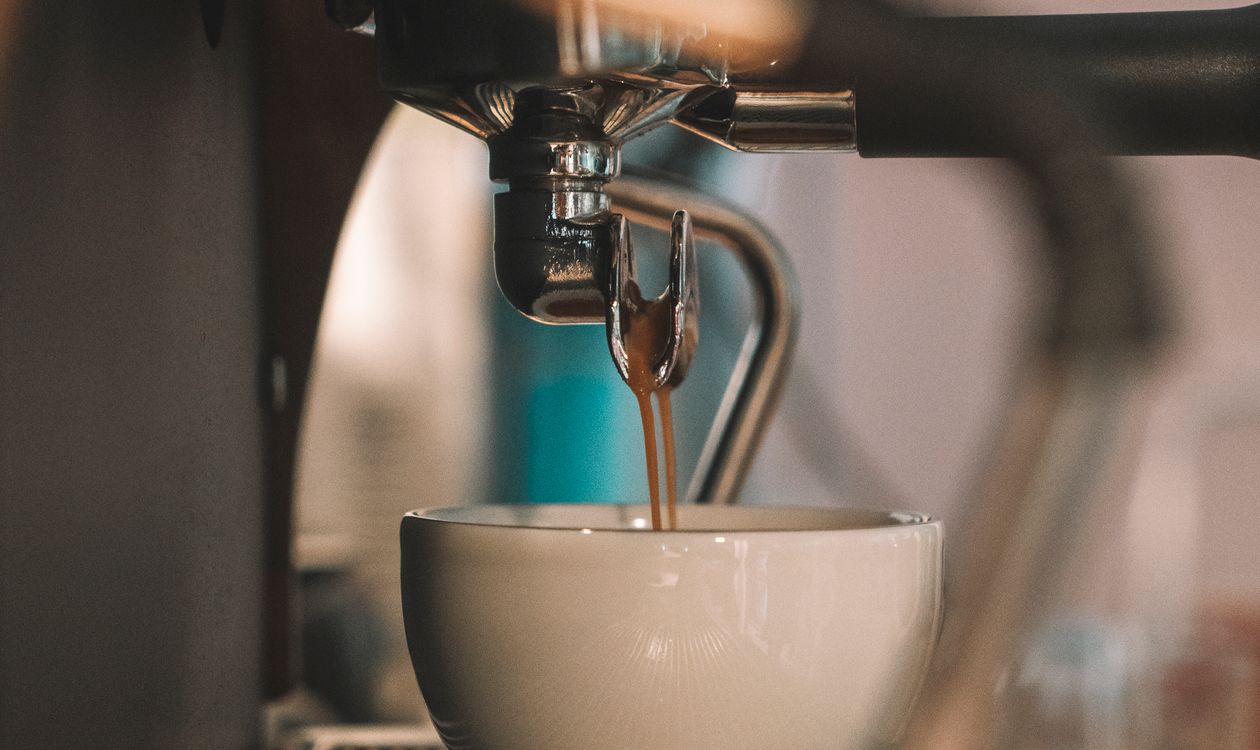
Five hundred dollars is the sweet spot for home espresso. Spend less and you usually get weak steam, bitter shots, and a machine you will want to replace within a year. Spend more and you are often paying for convenience you may not need. In this price range you can get PID temperature control, true 9-bar extraction, and steam wands that texture milk properly. But most roundups skip the catch: the sticker price is not the real price. Almost every great machine here performs best next to a good grinder, and that changes the math. We ranked the five machines actually worth your money in 2026.
Quick Comparison
| Product | Best For | Price Range | Our Rating |
|---|---|---|---|
| Breville Bambino Plus | Best overall | $450-$500 | 4.8/5 |
| Breville Barista Express | Best with built-in grinder | $450-$550 | 4.7/5 |
| Gaggia Classic Pro | Best for hobbyists | $430-$470 | 4.6/5 |
| De’Longhi La Specialista Arte Evo | Best compact all-in-one | $350-$400 | 4.4/5 |
| De’Longhi Stilosa | Best budget pick | $99-$150 | 4.0/5 |
Breville Bambino Plus : Best Overall
The Breville Bambino Plus is our pick for most people. Its ThermoJet system hits brewing temperature in about 3 seconds, and PID control with low-pressure pre-infusion keeps shots consistent, a rare combo at this price. The automatic steam wand textures milk to silky microfoam with almost no skill, then purges itself clean. The 54mm portafilter ships with both pressurized and standard baskets. For the full story on its smaller sibling, read our Breville Bambino review.
- 3-second heat-up, fastest in its class
- Automatic steam wand makes real microfoam with no practice
- PID control plus pre-infusion for repeatable shots
- Compact 7.7-inch width fits small kitchens
- Plastic-heavy build; light body can shift on the counter
- Small drip tray needs frequent emptying
Breville Barista Express : Best With Built-in Grinder
The Breville Barista Express solves the biggest hidden cost here by including a conical burr grinder. You grind directly into the 54mm portafilter, so every shot starts with fresh grounds and no second appliance on the counter. PID temperature control, pre-infusion, and a capable manual steam wand round out a package that often dips under $500 on sale. The footprint is large, and the built-in grinder is good rather than great, but as a one-box setup it is unmatched value.
- Built-in grinder means true one-box setup
- Excellent shot quality for the money
- Large 67-ounce water tank
- Big countertop footprint
- Manual steam wand takes a week or two to learn
- You may outgrow the built-in grinder before the machine
Gaggia Classic Pro : Best for Hobbyists
The Gaggia Classic Pro feels like commercial equipment: stainless steel body, 58mm commercial portafilter, and a 3-way solenoid valve for dry, easy pucks. Parts are easy to find and a huge owner community shares mods and repair guides, so it holds value and can last a decade. The tradeoff is a steeper learning curve with no PID and a 5-minute heat-up. Buy this if you want a hobby, not an appliance.
- Tank-like build, designed to be repaired
- 58mm commercial portafilter, huge accessory support
- Holds resale value better than anything else here
- No PID; temperature consistency needs technique
- Slower heat-up than ThermoJet machines
- Short cup clearance fits only smaller cups
De’Longhi La Specialista Arte Evo : Best Compact All-in-One
The De’Longhi La Specialista Arte Evo packs a burr grinder, a full barista kit, and even a cold brew mode into a genuinely compact body. Eight grind settings and active temperature control keep things simple for beginners. Where a separate grinder is a dealbreaker, this is the tidiest path to good espresso. Limits: only 8 grind steps for dialing in finicky light roasts, and a 51mm portafilter with fewer third-party accessories.
- Grinder and barista kit in one small footprint
- Cold brew mode in under 5 minutes
- Very beginner friendly controls
- Only 8 grind settings limits fine dialing-in
- 51mm portafilter, smaller accessory ecosystem
- Plastic-heavy construction
De’Longhi Stilosa : Best Budget Pick
The De’Longhi Stilosa is the cheapest machine here that still makes real espresso. Its pressurized baskets produce drinkable shots with pre-ground coffee out of the box, and with fresh beans plus a basic hand grinder it punches far above its price. See our Bambino vs Stilosa comparison for the full head-to-head. Be honest with yourself though: the steam wand is weak and you will outgrow this machine if espresso becomes a daily ritual.
- Unbeatable price for real espresso
- Works with pre-ground coffee via pressurized baskets
- Compact and simple to operate
- Weak steam power for milk drinks
- Pressurized baskets cap your quality ceiling
Semi-Automatic, Super-Automatic, or Manual: Which Type Fits You?
Price is only half the decision; the other half is effort. Super-automatics grind, tamp, brew, and froth at one touch. Perfect if you want lattes with zero learning curve, but you give up control and pay more. Semi-automatics, most of this list, ask you to grind, dose, tamp, and time the shot. The first week takes work, but it is how you get cafe flavor for $500 instead of $1,500. Manual levers like the Cafelat Robot go further: no pump, no electricity, total control, and shots rivaling machines three times the price, but no milk drinks without a separate frother. Match the type to your patience first, then pick the model.
The Real Price Tag: Budget for the Grinder Too
Here is the math nobody puts in the headline. A Breville Bambino Plus at $499 still needs an espresso-capable grinder, and a good one like the Baratza Encore ESP runs about $199. Your $499 machine is really a $700 setup. The Barista Express and La Specialista Arte Evo dodge this with built-in grinders, which is why they are such strong value. Add roughly $40 for a tamper and scale, plus $15 to $20 per bag of fresh beans. See our best coffee grinder for espresso guide for pairings at every budget. And remember: a $6 daily latte costs over $2,000 a year, so the setup pays for itself in months.
Make It Last: Water and Descaling Matter More Than the Brand
The difference between a machine that dies in two years and one that runs for five is rarely the logo. It is water. Hard tap water scales up boilers and valves, killing heat performance and eventually the pump. Use filtered water and descale every 2 to 3 months, monthly with very hard water. Purge and wipe the steam wand after every use. Five-minute habits, years of extra life.
When Should You Skip This Price Range?
Sometimes, honestly. If you will never enjoy grinding and tamping, skip semi-automatics and save for a super-automatic around $700 to $900. If you are already dreaming about pressure profiling, stretch to a prosumer single-boiler with PID instead. And if you mostly drink drip coffee, a $500 espresso machine is overkill. Everyone else, this is exactly the right budget. New to it all? Start with our beginner espresso machine guide.
Do I need a separate grinder with a $500 espresso machine?
Yes, unless the machine has one built in. Fresh grounds affect your shot more than any machine feature. The Barista Express and La Specialista Arte Evo include grinders; the Bambino Plus, Gaggia Classic Pro, and Stilosa do not.
Can these machines make real lattes and cappuccinos?
Yes. Every pick here steams milk. The Bambino Plus is easiest with its automatic wand, while the Gaggia and Barista Express reward a little practice with better microfoam and latte art potential.
How long will a sub-$500 machine last?
Expect 3 to 5 years with filtered water and regular descaling. The Gaggia Classic Pro often lasts longer since it is metal-built and designed to be repaired.
Is 15 bars of pressure better than 9?
No. Nine bars is the standard; higher numbers are mostly marketing. Temperature stability and grind quality decide taste.
Conclusion
For most buyers in 2026, the Breville Bambino Plus is the best espresso machine under $500: fast, forgiving, and genuinely capable of cafe-quality drinks. Pick the Barista Express for the included grinder, the Gaggia Classic Pro for hobby-grade build, the La Specialista Arte Evo for the smallest footprint, or the Stilosa on a tight budget. Budget for the grinder, use filtered water, and check our espresso machine buying guide before you buy.

3 Comments
Pingback: Espresso Machine Buying Guide: 7 Things to Check
Pingback: Breville Bambino Review 2026: Worth It for Beginners?
Pingback: Breville Barista Express Review 2026: Still Worth It?