
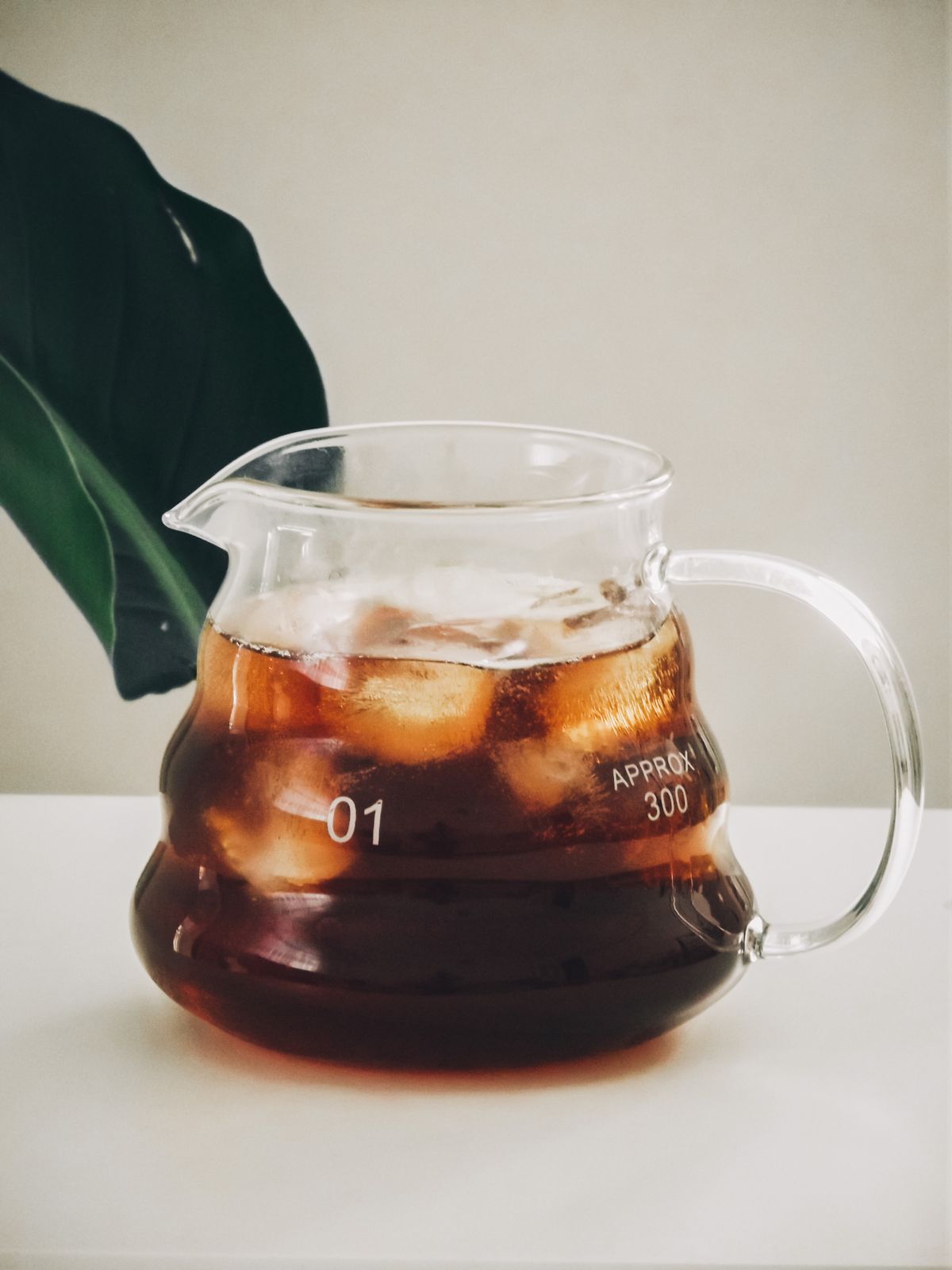
The 5 Best Cold Brew Coffee Makers for 2026
Cold brew is not iced coffee that went cold. It is coffee extracted slowly with cool water over many hours, producing a smoother, less acidic cup than hot coffee poured over ice. The equipment splits into two camps: simple carafes that make ready-to-drink coffee for tomorrow morning, and concentrate systems that brew a strong base you dilute per glass.
Neither style is better. The right one depends on how much you drink and how much cleanup you will tolerate. These five brewers cover both camps across every budget.
First, pick your lane. Choose ready-to-drink when you want to wake up, pour, and leave. Choose concentrate for iced lattes, serving several people, or controlling each glass.
1. Hario Mizudashi: Best Overall
The Mizudashi is the easiest entry into cold brew: a glass carafe with a fine-mesh basket inside. Fill the basket with coarse grounds, add water, refrigerate, and pull the basket when it tastes right. The 1-liter size makes about four glasses; a 600ml version suits one or two people.
Its strength is the absence of ceremony. No valves, no paper filters to reorder, no concentrate math. The narrow carafe slides into a fridge door, and the basket rinses clean in seconds. Mesh filtration leaves a little body and the odd speck of sediment, which most people never mind.
- Simplest workflow of any cold brew maker
- Ready-to-drink coffee with no dilution math
- Fridge-door friendly narrow carafe
- Basket disassembles for easy cleaning
Cons:
- Mesh filter leaves slight sediment vs paper-filtered systems
- 1-liter batch may be small for multi-drinker households
- Glass carafe needs normal care against knocks
2. OXO Brew Compact: Best Compact Concentrate
For cold brew as a latte base or custom-strength glasses, the OXO Compact is the smartest small system. A 24-ounce container with a rainmaker top distributes water evenly, then drains automatically into a separate borosilicate carafe. OXO’s recipe (24oz water to 6oz coarse coffee) yields about 16 ounces of concentrate to dilute to taste.
Brewer and carafe nest together for storage, and the cork stopper’s silicone seal lets the concentrate carafe go straight into the fridge.
- Repeatable concentrate recipe with marked measurements
- Auto-draining design, no holding a filter over a jar
- Ultra-fine reusable stainless filter
- Nests for compact storage
Cons:
- Concentrate uses more coffee per serving, so it costs more per glass
- Drain-and-dilute adds a step every time you pour
- Small batch size for heavy drinkers
3. Toddy Cold Brew System: Best for Large Batches
When cold brew becomes a household staple, you buy a Toddy. This non-electric steep-and-drain system sits behind countless cafes: grounds steep in a container, then drain through the filter into a decanter below. One batch makes a week of iced coffees, lattes, even hot cups diluted with hot water.
Buy it once you know your preferred ratio. The Toddy rewards routine: a big system making two glasses a week just creates stale coffee and extra cleanup. For a household that drinks it daily, nothing beats the cost per glass.
- Large-batch concentrate at the lowest cost per serving
- Simple steep-and-drain with no electronics
- One batch covers a full week for most households
- Decades-long track record in homes and cafes
Cons:
- Needs real counter space while brewing and fridge space after
- Paper filters are an ongoing purchase
- Overkill if you drink cold brew occasionally
4. County Line Kitchen 64oz: Best Budget
Sometimes the best design is a mason jar with a good filter. The County Line Kitchen is a 64-ounce glass jar with a stainless mesh filter, leak-proof lid, and flip-cap spout that pours without dribbling. It brews a generous batch, cleans in seconds, and costs less than two cafe cold brews.
When it is not brewing, it is just a pitcher. No special parts to store, no valves to lose.
- 64oz capacity at a budget price
- Leak-proof lid with flip-cap pouring spout
- Reusable stainless mesh filter, dishwasher safe
- Doubles as a regular pitcher
Cons:
- Wide jar takes real fridge shelf space
- Rustic look is not for everyone
- Mesh filter leaves more sediment than paper systems
5. Takeya Deluxe: Most Durable Pitcher
The Takeya Deluxe is the pitcher you buy when glass makes you nervous. Its 2-quart BPA-free Tritan body is effectively shatterproof, with an airtight lid and a fine-mesh filter that twists shut. It survives crowded fridges and dishwashers without a second thought.
Two quarts suits daily drinkers: enough for several days without a Toddy-sized commitment. The airtight seal matters, since cold brew picks up fridge odors fast in a loosely covered jar.
- Shatterproof Tritan body, ideal for busy kitchens
- Airtight lid keeps coffee fresh and odor-free
- 2-quart capacity suits daily drinkers
- Fits most fridge doors, dishwasher safe
Cons:
- Plastic body does not feel as premium as glass
- Filter is good but not the finest available
- Ready-to-drink only, no concentrate option
Here is how the five compare side by side:
| Brewer | Style | Batch Size | Filter | Best For |
|---|---|---|---|---|
| Hario Mizudashi | Ready to drink | 1 liter | Mesh basket | Most people |
| OXO Brew Compact | Concentrate | ~16oz concentrate | Ultra-fine steel | Lattes and custom glasses |
| Toddy System | Concentrate | Large batch | Paper + felt | Households and heavy drinkers |
| County Line Kitchen | Ready to drink | 64oz | Mesh | Budget large batches |
| Takeya Deluxe | Ready to drink | 2 quarts | Fine mesh | Durability and daily use |
No Gear? Start With a Jar Tonight
You do not need to buy anything to find out whether you like cold brew. Grab any large mason jar or pitcher, add coarse-ground coffee and cold filtered water at roughly a 1:8 ratio (125 grams of coffee per liter of water), stir, cover, and refrigerate for 14 to 16 hours. Then pour it slowly through a paper coffee filter set in a funnel or sieve into a clean jar.
The paper filter does the work a brewer’s mesh would do, giving a genuinely clean cup. Enjoy the ritual and you will buy a dedicated brewer for convenience; most jar-method converts end up with the Hario within a month. If not, you spent nothing and learned something.
Three Starter Recipes With Exact Ratios
Ratios are just coffee to water by weight. A kitchen scale turns guesswork into repeatability. These three cover every brewer above.
| Style | Ratio | Per Liter of Water | Steep Time | Serve |
|---|---|---|---|---|
| Mellow ready-to-drink | 1:10 | 100g coarse coffee | 12-14 hours | Pour over ice as is |
| Balanced ready-to-drink | 1:8 | 125g coarse coffee | 14-16 hours | Pour over ice, milk optional |
| Strong concentrate | 1:4 | 250g coarse coffee | 16-20 hours | Dilute 1:1 or 1:2 with water or milk |
Grind coarser than drip, about like raw sugar. Too fine gives sludge and a muddy cup. Start with the balanced recipe, taste it black over ice, and adjust one variable next batch. Write down what you change, or you will never repeat a great batch.
How Long It Keeps, and When to Toss It
Ready-to-drink cold brew stays fresh about 7 days refrigerated in a sealed container. Concentrate keeps 10 to 14 days because its strength acts as a mild preservative. Those numbers assume a clean brewer and a fridge at or below 40 degrees.
Signs it has turned: a sour or vinegary tang, a flat cardboard taste, or any fizziness. Fresh cold brew smells like coffee and chocolate; old cold brew smells like a wet dishrag. Make only what you will drink. A giant batch that goes stale on day nine is not a bargain.
Frequently Asked Questions
Does cold brew have more caffeine than regular coffee?
It depends on how you serve it. Concentrate is stronger per ounce than drip, but you dilute it, so a finished glass lands roughly similar to drip, sometimes a bit higher. If caffeine hits you hard, start with the mellow 1:10 recipe.
What grind size works best?
Coarse, like raw sugar or breadcrumbs. Fine grounds over-extract during the long steep and turn to sludge that clogs mesh filters. If your cup tastes muddy or bitter, your grind is almost certainly too fine.
Can I heat up cold brew?
Yes, and it is underrated. Dilute concentrate with hot water instead of cold for a smooth, low-acid hot coffee. Do not microwave it aggressively, since overheating brings out harsh notes. Warm it gently.
Room temperature or fridge for steeping?
Both work. Room temp extracts a bit faster (12-16 hours); fridge takes longer (16-24) but tastes slightly cleaner. Pick one and stay consistent.
Why is my cold brew sour?
Usually under-extraction: too coarse a grind, too little coffee, or too short a steep. Bump the coffee amount first, then extend time. True sourness from spoilage is rare before a week, so an early sour batch is a recipe issue, not a freshness one.
Conclusion
Start simple. The Hario Mizudashi makes excellent cold brew with the least fuss and money, which is why it tops nearly every serious roundup. Move to the OXO Compact for latte concentrate, or the Toddy when the whole household is hooked. Still deciding? Try the jar method tonight.

1 Comment
Pingback: French Press Coffee Ratio: The Only Chart You Need